The International Neuromodulation SocietyThe Fastest-Growing, Worldwide Multidisciplinary Body Devoted to Building Knowledge of NeuromodulationThe International Neuromodulation Society (INS) is a non-profit group of clinicians, scientists and engineers dedicated to the scientific development and awareness of neuromodulation – the alteration of nerve activity through targeted delivery of a stimulus, such as electrical stimulation or chemical agents, to specific neurological sites in the body. The San Francisco-based INS was formed in 1989 and educates and promotes the field through meetings, its peer-reviewed journal Neuromodulation: Technology at the Neural Interface, mentorship, and chapter websites. The INS also provides information for patients and produces rolling news briefs about this rapidly evolving field. Donate Today
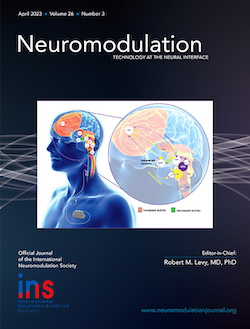
The INS Peer-Reviewed JournalThe INS journal Neuromodulation: Technology at the Neural Interface has a growing Impact Factor and is indexed in Index Medicus, MEDLINE and Pubmed from its first issue in 1998. Members may log in to the members-only section to read the journal online. The journal also has social media accounts on Twitter, Facebook, and Instagram.
The Neuromodulation Podcast has been developed for our membership to dive into the forefront of today's emerging neuromodulation techniques, insights, and ethical and clinical applications. Join the multidisciplinary collaboration of medical care providers, scientists, and engineers who are part of the global conversation that's shaping the future of healthcare. Subscribe now wherever you get your podcasts. What is Neuromodulation?Medical Professionals can learn about various considerations concerning neuromodulation and clinic contacts. Once your preliminary questions have been answered, please use the Contact Us facility to find out more and to discuss specific objectives. Others may simply wish to join the INS and one of its related chapter societies, please use the Membership Application. Clinical trials that involve a wide range of emerging neuromodulation approaches are listed on our Research page. Neuromodulation clinical trials address symptom control through nerve stimulation in such condition categories as:
Breaking NewsSeptember 9, 2026 - Researchers led by Massachusetts Eye and Ear and Harvard Medical School developed DystoniaDBSNet, a deep learning algorithm that predicts whether a person with isolated dystonia is likely to benefit from deep brain stimulation of the globus pallidus internus (GPi-DBS), using only a routine pre-operative structural brain MRI. Trained and validated on 175 patients across five international centers, the model achieved 95.5% overall accuracy in predicting treatment benefit, with consistent performance across focal, segmental, and generalized forms of dystonia, and completed each prediction in about 36 seconds. The authors note the model's underlying neural marker draws on sensorimotor, parietal, and thalamic brain regions previously implicated in dystonia, and that prospective multi-institutional trials are needed before clinical adoption. (Source: npj Digital Medicine, open access) September 9, 2026 - A multicenter randomized controlled trial led by researchers at Wake Forest University School of Medicine found that high-frequency (10-kHz) spinal cord stimulation significantly reduced pain and improved sensory function in people with treatment-resistant painful diabetic neuropathy. The study also identified early evidence of increased small nerve fiber density in the skin among treated participants, though the researchers note further study is needed to determine the significance and durability of that finding. (Source: Diabetes Care) State of the Art in Neuromodulation or Spinal Cord Stimulation Therapy August 26, 2026 - A new review traces the evolution of spinal cord stimulation (SCS) from paresthesia-based tonic stimulation to mechanism-informed, personalized neuromodulation, covering burst, high-frequency, closed-loop ECAP-controlled, and differential target multiplexed stimulation paradigms. The authors outline predictors of clinical response, including psychological readiness and pain phenotype, along with safety considerations such as lead migration and infection, and point to artificial intelligence and biomarker-guided programming as key directions for improving long-term outcomes. July 15, 2026 - Researchers at Carnegie Mellon University developed a joint learning framework that pairs structured tactile feedback with an adaptive decoding algorithm, allowing users and the machine to adapt to each other simultaneously during brain-computer interface (BCI) training. In a study of 31 BCI-naïve participants, the approach achieved average online accuracies of 86.0% for one-dimensional and 77.5% for two-dimensional motor imagery control, with gains that persisted after tactile stimulation was withdrawn, pointing to potential applications in communication and neurorehabilitation. FDA Approves First Neurostimulation Device for PTSD July 02, 2026 - A noninvasive neurostimulation device became the first to receive FDA approval specifically for treating PTSD symptoms, based on a clinical trial of 383 adults in which two-thirds reported meaningful symptom improvement. Veterans in the U.S. are expected to gain access through the VA this summer. To see select neuromodulation news by category, as well as news about the INS in particular, please visit the Newsroom. To see archived news briefs dating back to January 2011, visit the News Archive. Continue Reading News Briefs |